One of the best lessons we can learn in life is that we can transform disappointment—even tragedy—into opportunity.
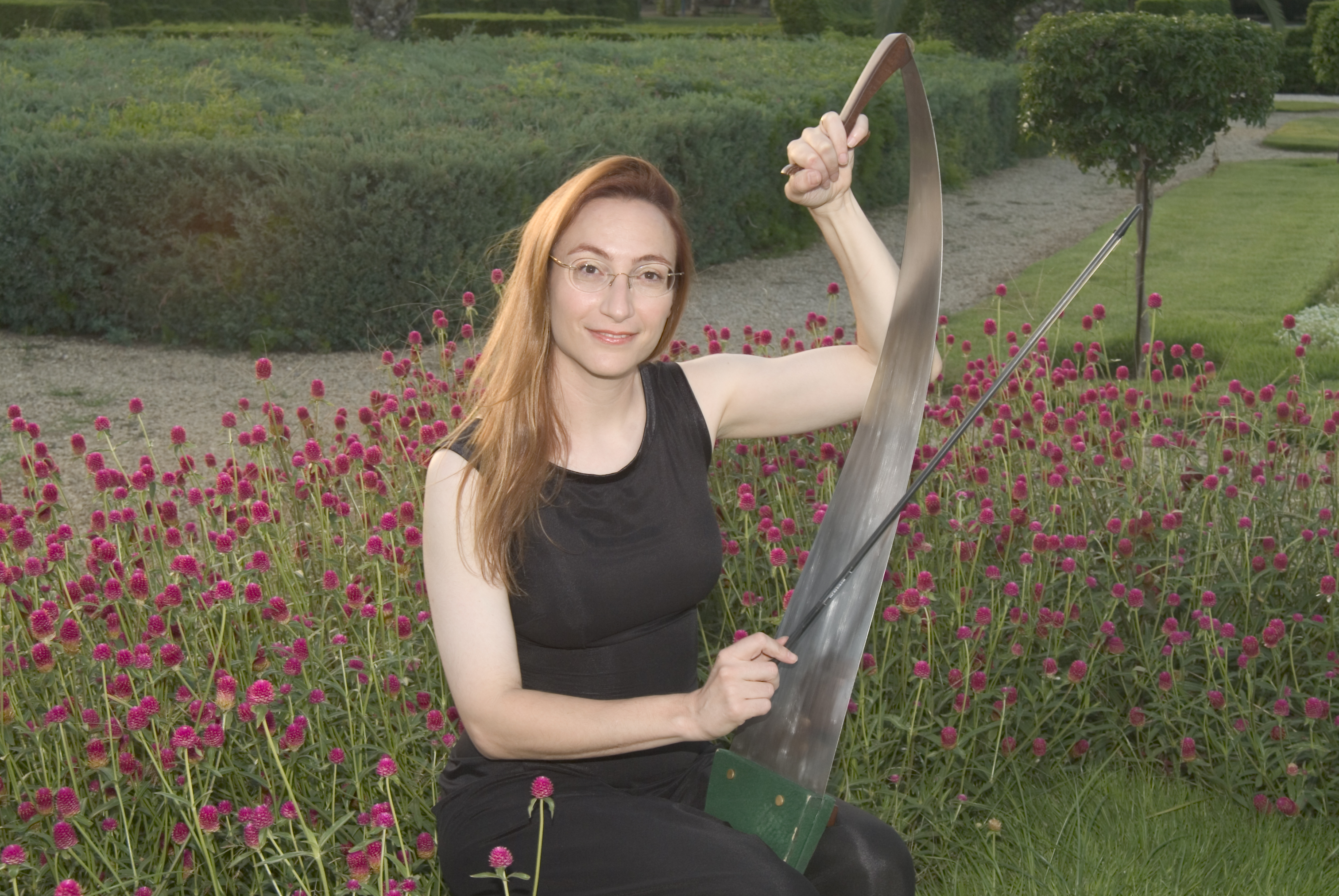
Natalia “Saw Lady” Paruz was a professional dancer. She was a trainee with the Martha Graham Dance Company of Contemporary Dance, a tap-dance teacher and demonstrator for Dance Masters and Dance Educators of America. She earned a living performing in musical theater.
Then one day, Natalia was on her way home from Lincoln Center in New York City. As she crossed a street, she was hit by a speeding taxicab. “This was the end of my dance career,” she says. “I suffered permanent damage to my upper spine. Needless to say, I was devastated. I had dedicated my life to dance, and now what was I going to do?”
She tried working at different jobs and studied computer programming. ”But nothing filled the void inside of me left by the vocation which was stolen from me,” Natalia says. “Then life just brought me to what I needed to find. So I learned that sometimes we just need to go on living and wait for something to show up.”
That something came during a trip to Austria that Natalia’s parents took her on to help cheer her up. “As a kid, I loved the movie “The Sound of Music,’” she says. “I watched it 14 times! So, my parents took me to the country where this film was made.”
While there, they attended a show for tourists and one of the acts was a musical saw player. “I have never seen nor heard of a musical saw before,” Natalia says. “This was totally new to me, and it blew me away. I thought the sound was phenomenal; spiritual, angelic and different from any sound I heard before.”
But what really appealed to her was the visual element. “The whole instrument moved and the sawist’s upper body along with it,” she says. “It was like a dance! The musical saw is one of very few instruments where the entire instrument moves. And it changes shape constantly as you play it.”
Natalia went backstage to talk with the sawist and asked him to give her lessons. “His answer was a flat and resounding ‘no,’” she says. “I said I would pay him, and asked how much he wanted. But he just told me that I didn’t need a teacher. ‘Pick up a hand saw, hold it the way you have seen me do on stage, and you’ll figure it out,’ was his instruction.”
The sawist did provide a friendly tip: the more expensive the saw, the better the sound.
Armed with these instructions, Natalia borrowed an old saw from someone. It was rusty from time and worn from woodwork, so it only had six notes left on it. She then headed over to the local hardware store, which provided an interesting experience.
“The owner became furious about the ‘whistling’ somebody was doing in his store,” Natalia says. “He was very puzzled when he saw where the sound was coming from. But he let me continue to test all his saws when he realized I was going to purchase an expensive one.”
It turned out the Austrian sawist was right. “I am very grateful to him now, for having given me the satisfaction of being able to say that I did it all on my own,” Natalia says. But once she made the decision to play music on a carpenter’s handsaw, the challenge was to find work with this new talent.
“At first, no one seemed to know what the musical saw was, and I had to educate people about the existence of this instrument,” Natalia says. “The biggest challenge was to convince music directors, conductors, and event organizers to take a listen.”
They were all reluctant to do so, assuming it would sound like the noise made when a handsaw cuts a piece of wood, Natalia says. “Those I managed to convince to take a listen all said the same thing afterwards: ‘wow, it doesn’t sound anything like I imagined it would!’”
Today, the Saw Lady—as Natalia is professionally known—brings joy to countless people through her talent. She has been a professional saw musician for 25 years. Her music is on YouTube, Spotify, Amazon and her web site, as well as on all the major social media platforms.
Natalia’s music has been part of many movie soundtracks. She has worked with some of the top artists in the world, including conductor Zubin Mehta, PDQ Bach composer Peter Schickele and film director Francis Ford Coppola. She has appeared at such venues as Carnegie Hall, Madison Square Garden, Lincoln Center—and the New York City subway system.
It’s through her work as a busker—a street musician—in the subway that Natalia has had some of her most memorable and inspirational moments. “I have witnessed many positive acts take place there while I played,” she says.
Her favorite incident occurred while she was playing at the Times Square station. “A blind man joined a group of passers-by gathered around me,” she says. “The blind man’s face lit up to the sound of my music. It was clear he loved it.”
A lady from the crowd, unrelated to the blind man, noticed his joy. “She came over to me, bought one of my CDs, went over to the blind man, put the CD in his hand and said, ‘this is the music you are hearing now. This is for you,’ and she gave it to the blind man!” Natalia says. “For me, to think that in a small way my music was the impetus for such an amazing, selfless, beautiful act of kindness between two strangers, was priceless!”

Another time, Natalia was in a coffee shop and a man there recognized her. He told her about a time when he had lost his job. Life was going badly for him and he had contemplated suicide.
“He happened into the 59th Street subway when I was playing on the opposite platform from where he was,” Natalia says. “Listening to me play gave him hope.”
At the coffee shop, the man asked for Natalia’s email address. Later, his wife sent a message confirming his story, and thanked her. “This is the amazing thing about playing in the subway,” she says. “Your sound travels and you don’t even know who is hearing it and how your sound weaves into the soundtrack of their daily life.”
One challenge that comes with busking is perception. Many assume that people who play music in the street are homeless, jobless, and not good enough to play elsewhere, Natalia says.

“I know hundreds of buskers, and none of them are homeless or jobless, and we all play in lucrative, fancy places as well,” she says. “For years, I argued the case that busking is an art form of its own. It is different from stage performing in audience proximity and involvement, thus creating a more intimate setting. And it reaches a larger variety of people. I don’t have to be a busker. I choose to be a busker.”
When she was first learning to play the saw, Natalia used to bring it to work and during breaks went outside to practice. Encouraged by people’s reactions, she moved to playing on the street. When winter came she began playing in the subway. And this opened the door to an opportunity she had never imagined when she started her journey.
“Performing on the street or subway you are exposed to people of all sorts, many nice but some violent and scary,” Natalia says. “I had to learn how to not be afraid and how to get along with everybody. Playing in public spaces totally changed me and my life. It taught me to love people because 99% of them are wonderful. It opened up a whole new world to me, and the opportunities that came my way because of it are priceless.”
One of the lessons Natalia has learned is to follow her heart and not social conventions.
“The idea of making music with a carpenter’s handsaw might be as bizarre as someone trying to cut a log in half with a cello, and a subway station might be looked down upon as a performance venue,” she says. “But if you sing your heart out and enjoy yourself, you can lead people to join in the magic.

“I’m grateful for all the adventures playing the musical saw took me on,” Natalia says. “The life I ended up with is so much more interesting than the one I would have had if I remained a dancer. Sometimes a bad thing that happens to us, like the car accident that ended my dance career, turns out to be a good thing in disguise. It just takes a little while to realize it. I am grateful for all of it.”
“Being challenged in life is inevitable, being defeated is optional.”—Roger Crawford
If you haven’t subscribed, you’re missing out on post updates! To sign up, type your email in the box below then click on the green subscribe button. When you receive a confirmation message from WordPress, click on the “confirm now” button to complete the process.


Leave a Reply