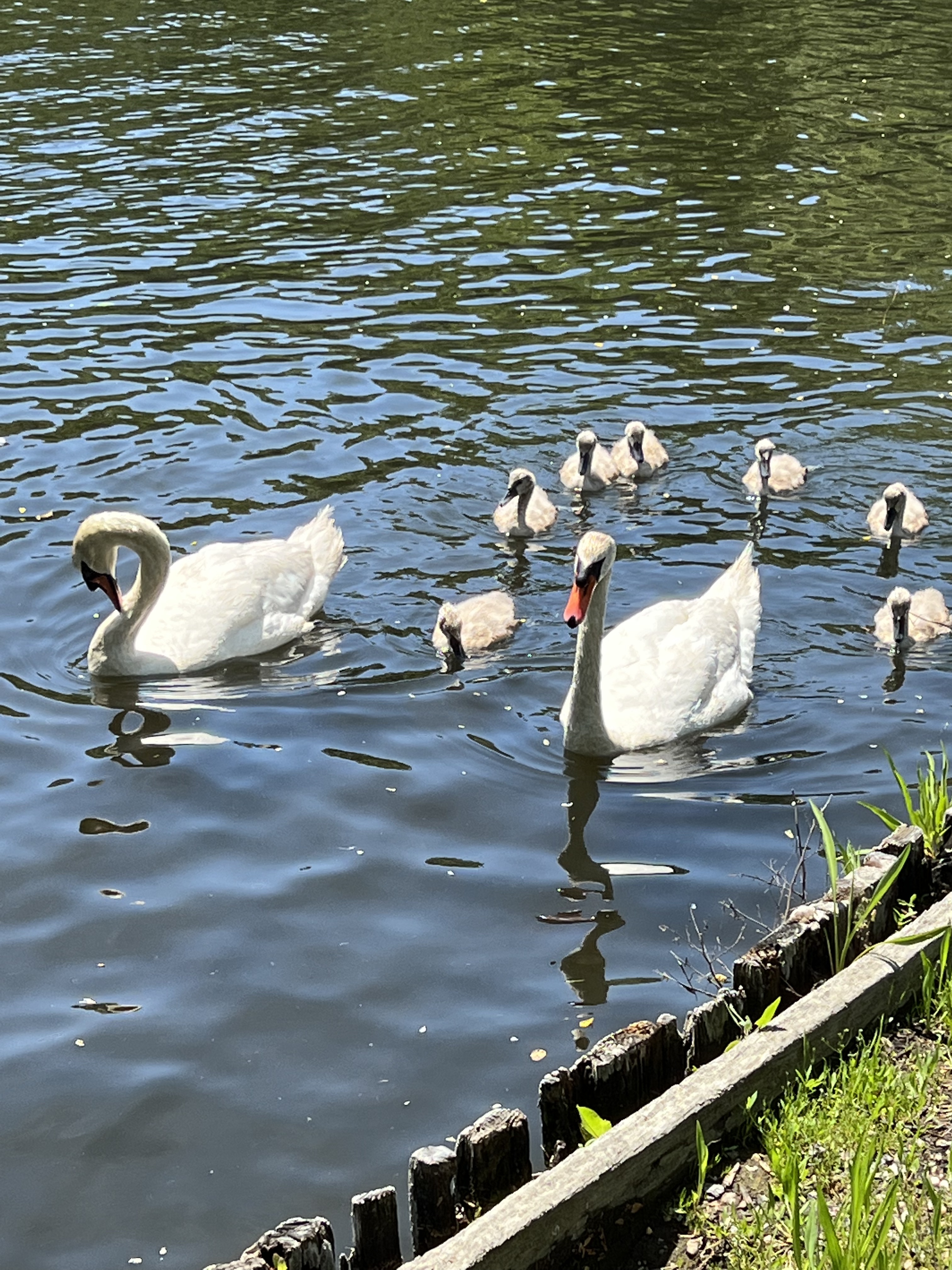
Recently I was at a local park with my wife and a long-time friend. We were enjoying the tranquil scene before us, which included five ospreys flying gracefully over a large pond. Suddenly, a swan flew right over us and crashed loudly through a thick growth of reeds before landing clumsily in the water.
For a few moments the swan didn’t move. Then it recovered and began to swim slowly away from the shore. The most amazing thing about the episode was that within seconds of the botched landing, many other swans from different parts of the pond began heading over.
I’d never seen anything like it. I don’t profess to be an expert in swan behavior, but they seemed to be coming to check on their fellow swan to see if it was injured. There was no malice in their actions, just a gentle swim toward their comrade. It was awesome to see them respond this way.
Earlier in the same park we had seen an owl and her owlets in a tree. The mother was being quite attentive, making sure the babies had enough to eat and keeping a sharp lookout for any predators.

These nature scenes got me thinking about how much we all rely on others. Whether it’s our spouse or partner, parents and other immediate family, extended family, friends, associates, teachers, medical personnel, social groups or others, we thrive—and even survive—because of them.
Many of us like to think we’re independent. I used to feel that way a lot and sometimes still do. But as I’ve learned from experiencing some major health issues, being independent is not always practical or possible.
That might not be a bad thing. Sometimes we need help from other people, and should count ourselves fortunate when others are available to provide that assistance. It’s safe to say I wouldn’t be around to write this post if not for the help of many people over the years.
But it goes beyond the need for help because of a health problem or other crisis. Having other people involved in our lives is important in our ability to function and live in harmony.
The American Journal of Lifestyle Medicine points out that “humans are wired to connect, and this connection affects our health. From psychological theories to recent research, there is significant evidence that social support and feeling connected can help people maintain a healthy body mass index, control blood sugars, improve cancer survival, decrease cardiovascular mortality, decrease depressive symptoms, mitigate post-traumatic stress disorder symptoms, and improve overall mental health.”
I think this perspective on relying on others from professional healthcare consultant Jim Haggerty sums it up well:
“When we can rely on other people, we are being genuine and recognize that we cannot do everything alone. This humbling feeling is important in developing as individuals and within a community. Many may fear asking for help, because of worries that it may make us feel insignificant. In reality, asking for help and allowing gratitude to flow through you can help you feel happier as well.”
Those who help others through efforts such as volunteering can actually help themselves in the process. Scientific research over the years has shown links between volunteering and better physical and mental health.
For example, a study that looked at relationships between volunteering and health in about 13,000 U.S. adults, published in the American Journal of Preventive Medicine, showed that people who volunteered at least 100 hours per year had a reduced risk of dying over a four-year follow-up period compared with non-volunteers. They had higher rates of optimism and purpose in life, and lower rates of depression, hopelessness and loneliness.
One of the best things about needing or helping others is that it allows us to feel and express gratitude. Here’s Haggerty again to bring this point home:
“We are not operating alone in this world, we are surrounded by an incredible number of individuals who are just as complex as we are, and doing just what we are trying to do too—be human. Being grateful means feeling appreciation and recognizing the value of others’ actions.”
By putting gratitude ahead of pride and a sense of independence, we can not only accept our need for others, but embrace it as well.
“When we seek for connection, we restore the world to wholeness. Our seemingly separate lives become meaningful as we discover how truly necessary we are to each other.”—Margaret J. Wheatley
Photo of owls taken by Howard Katz
If you haven’t subscribed, you’re missing out on post updates! To sign up, type your email in the box below then click on the green subscribe button. When you receive a confirmation message from WordPress, click on the “confirm now” button to complete the process.


Leave a Reply